IoT Voice AI Hardware

SafeT

Connected wearable accessories with voice AI, biometric monitoring, and real-time alerts — designed to help women travel safely while staying connected to loved ones.

Product Management IoT & Hardware Voice AI System Design 3D Printing

The Problem

Travelling — irrespective of duration or mode of transport — is always risky, especially for women. Existing safety solutions rely on phone-based apps that require active user intervention at the exact moment when a person may be unable to use their phone.

63% of women think about safety always or frequently while traveling
93% share itineraries with friends/family to feel safer
1 in 3 women have experienced harassment during travel

When we spoke to women about their travel experiences, a clear pattern emerged: parents who don't want their daughters traveling alone in an Uber, friends who insist on a "home safe" text, and the near-universal reliance on WhatsApp live location sharing. The anxiety is constant — and current solutions are passive, phone-dependent, and offer no biometric context.

With SafeT, we wanted to design a system to help women and their loved ones feel connected — offering physical safety, mental peace, and sentimental value through wearable accessories that work even when your phone can't.

The Solution

SafeT is a suite of connected wearable accessories — a necklace pendant and companion ring — that pair biometric sensors, a voice AI agent, and cloud-based alerting to create a hands-free safety system.
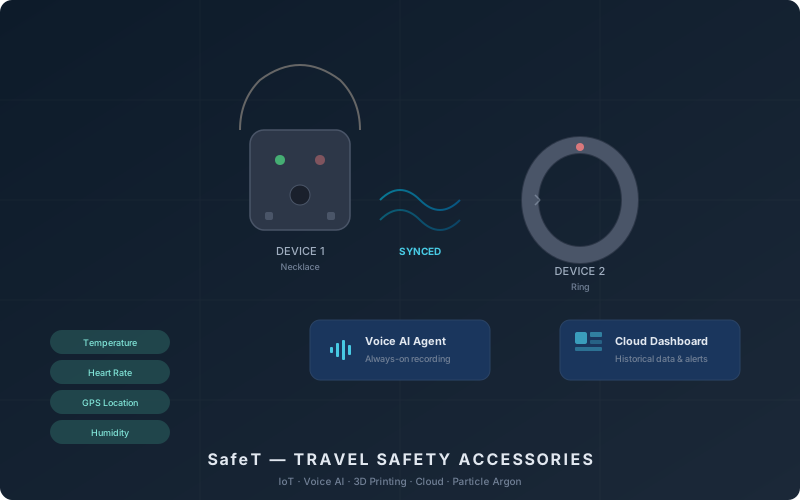
SafeT system architecture showing connected necklace and ring devices with sensor data flow, voice AI agent, and cloud dashboard

System architecture: Two synced devices communicate bidirectionally with integrated sensors, voice AI, and cloud dashboard

Device 1: Necklace Pendant

Houses temperature & humidity sensor (DHT), pulse rate monitor, panic button, LED status indicators, buzzer alert, and GPS module. Acts as the primary sensor hub.

Device 2: Companion Ring

Receives alerts from the necklace via sound, red LED, and vibration feedback. Features a button to send "help is coming" confirmation back to the necklace wearer.

Voice AI Agent

Always-on ambient voice recording that detects distress keywords, unusual silence after detected conversation, or explicit voice commands to trigger emergency protocols.

Cloud Dashboard

Web-based platform displaying historical sensor data, real-time location, health readings, and anomaly alerts. Shareable with trusted contacts and family.

Voice AI Agent

The most critical differentiator of SafeT is an integrated voice AI agent that provides passive, always-on safety monitoring without requiring the user to press a button or unlock a phone.

How It Works

The voice AI module embedded in the necklace pendant continuously processes ambient audio through an on-device ML model. It operates in three distinct modes:

  • Passive Monitoring: Ambient audio is processed locally for distress patterns. No audio is stored or transmitted unless a trigger is detected — preserving privacy by design.
  • Keyword Detection: Recognizes configurable safe words and distress phrases (e.g., "I need help," "call 911," or custom phrases) that activate emergency protocols instantly.
  • Contextual Awareness: Detects anomalous audio patterns such as sudden silence after detected conversation, raised voices, sounds of impact, or prolonged screaming — and escalates to the alert pipeline.

Emergency Protocol Flow

When a trigger is detected, the system initiates a multi-step response:

  • Step 1 — Immediate Alert: The companion ring vibrates and flashes red, notifying the paired contact that something may be wrong.
  • Step 2 — Voice Recording Activated: Audio recording begins and is streamed to the cloud for evidence preservation and real-time analysis.
  • Step 3 — Location Broadcast: GPS coordinates are pushed to the dashboard and all registered emergency contacts.
  • Step 4 — Escalation: If no "all clear" response is received within a configurable window, the system sends an automated alert to the nearest police authority with location and audio context.

Privacy-First Design

Voice AI in a safety product raises legitimate privacy concerns. SafeT addresses this through:

  • On-device processing for keyword detection — audio never leaves the device during passive monitoring
  • Explicit user consent and visual LED indicator when recording is active
  • Automatic purging of ambient audio buffers every 30 seconds if no trigger is detected
  • End-to-end encryption for all transmitted audio and sensor data

Process

Built in 36 hours at TartanHacks (CMU's largest hackathon) by a team of four. I led hardware integration, IoT connectivity, and cloud architecture while contributing to overall product strategy.

Task Breakdown & Parallel Workstreams

We did a surprisingly quick decomposition of all the components needed, organizing the team into three parallel workstreams:

  • Hardware (Tanya): Circuit design with Particle Argon, sensor integration (DHT for temperature/humidity, pulse rate monitor), LED & buzzer alert system, and device-to-device communication.
  • Software (Preethi): Machine learning algorithm for anomaly detection in biometric readings, and data pipeline to the cloud dashboard.
  • Industrial Design (Melody): 3D-printed housings designed in SolidWorks — necklace form factor chosen over ring/bracelet to accommodate larger early-stage components without resembling a FitBit.
  • Presentation (All): Simultaneous documentation and slide preparation throughout the hackathon.
Whiteboard showing the system architecture breakdown with hardware components, software features, and presentation tasks identified

System decomposition: mapping hardware, software, and presentation workstreams during initial planning

3D Printing & Housing Design

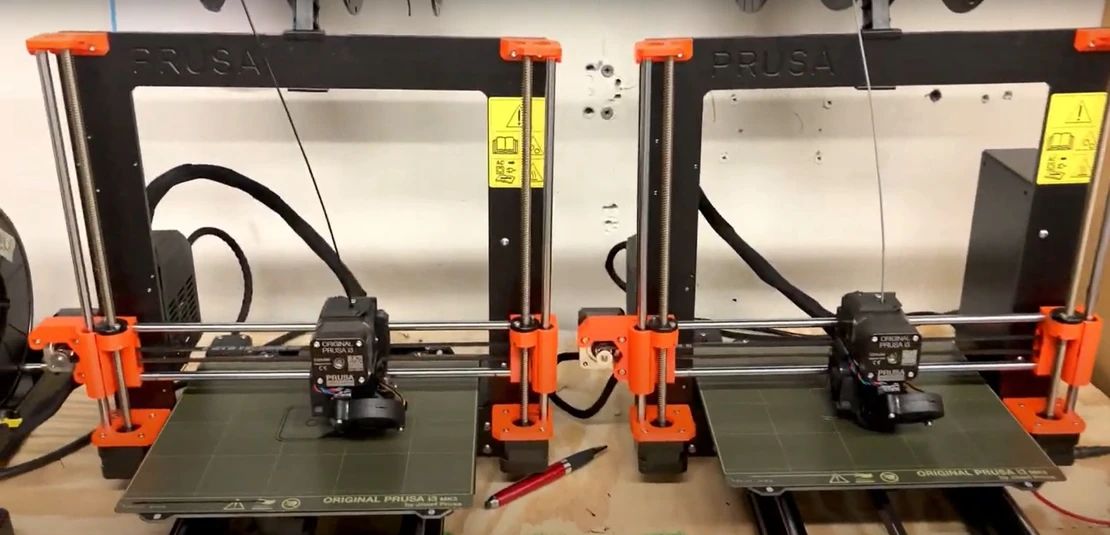
Melody designed the pendant housing in SolidWorks with two front-facing holes for LEDs and buzzer, and two top holes for the necklace cord. We used the RoboClub's Prusa i3 MK3 3D printers to fabricate housings for both devices simultaneously.

Two Original Prusa i3 MK3 3D printers running simultaneously to fabricate the necklace pendant housings

Dual Prusa i3 MK3 printers in RoboClub fabricating housings for both devices concurrently

Hardware Integration & Debugging

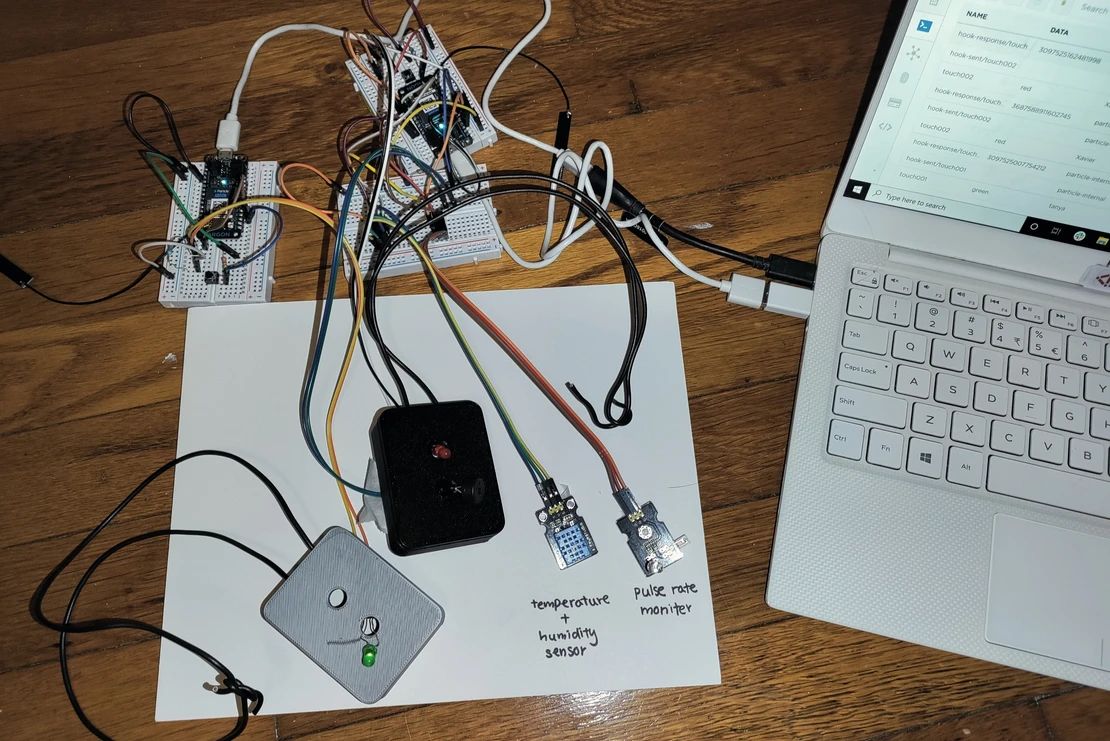
Connecting the Particle Argon devices, sensors, and communication layer was the most technically challenging phase. Despite having built connected device systems three times before, circuits are unpredictable — and Particle even more so. Unlike software where you get error messages with line numbers, hardware debugging is an exercise in patience and multimeter readings.

Hardware prototype showing Particle Argon microcontrollers on breadboards connected to temperature/humidity sensor and pulse rate monitor, with laptop showing Particle Cloud console

Hardware prototype: Particle Argon devices with DHT temperature/humidity sensor and pulse rate monitor, connected to Particle Cloud console

Cloud Integration with Google Cloud

Integrating sensor data with an external platform was new territory. The Particle Cloud's Pub/Sub integration with Google Cloud allowed us to publish events from the device and subscribe to them in Firestore. The data pipeline captured dew point, humidity, temperature, and pulse rate readings in real time.

  • Used Particle's integrations tab to connect published events to Google Cloud Pub/Sub
  • Monitored live sensor data through the Particle serial monitor via command line
  • Routed data to Firestore for persistence (initially intended for Datastore)
  • Designed the dashboard architecture for historical data visualization and anomaly flagging

Feature Comparison

SafeT combines hardware, voice AI, and cloud capabilities that no single existing solution offers.

Feature SafeT Phone Apps Smart Jewelry Personal Alarms
Hands-free activation Voice + auto-detect Requires phone Button press Button/pull pin
Biometric monitoring Heart rate, temp, humidity None Limited None
Voice AI recording Always-on, privacy-first Manual record None None
Paired device alerts Bidirectional sync Notification only One-way None
GPS tracking Embedded module Phone-dependent Some models None
Historical dashboard Cloud-based, shareable Varies None None
Works without phone Fully independent No Partially Yes

Results & Recognition

Top 5 Grand Prize Finalist out of 73 projects
358 Hackers competing at TartanHacks
36hrs From concept to working prototype
4 Judges presented to during Project Expo
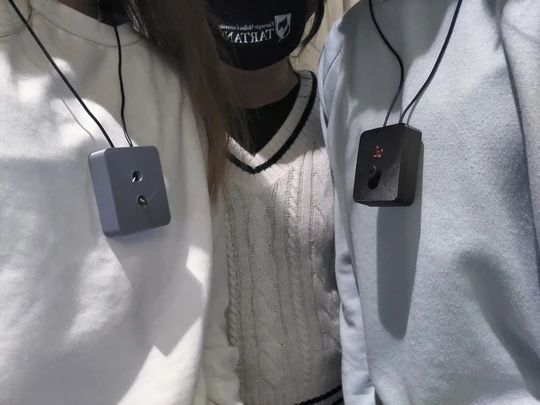
Two team members wearing the finished SafeT necklace pendants, showing the 3D-printed housings with integrated LED indicators

The finished SafeT necklace pendants worn by team members — 3D printed housing with embedded sensors, LEDs, and buzzer

Grand Prize Finalists

Out of 73 projects and 358 hackers, SafeT was selected as one of only 5 teams to present to a panel of 8 judges for the $2,000 Grand Prize. Our combination of hardware, cloud integration, voice AI vision, and real-world applicability set us apart.

Demo & Presentation

The team collaborated on a video submission and then presented live during the Project Expo, fielding questions from four judges across different sponsor organizations. The presentation highlighted the full system — from sensor readings on the serial monitor to the cloud dashboard architecture and the voice AI roadmap.

Product Roadmap

The hackathon prototype validated the core concept. The roadmap focuses on miniaturization, full AI integration, and scaling to a commercially viable safety platform.

1

Miniaturize electronics — Scale down the pendant size using custom PCBs and SMD components, making the form factor jewelry-grade rather than prototype-grade.

2

Full Voice AI integration — Deploy on-device ML models for keyword detection, distress pattern recognition, and ambient audio analysis with privacy-preserving edge computing.

3

Cloud platform & dashboard — Build an all-in-one web platform with historical data visualization, anomaly alerts, account management, and family/friend sharing.

4

GPS & location intelligence — Embed a GPS module for live location tracking with geofencing alerts and route deviation detection.

5

Emergency services integration — Auto-notify the closest police authority with location, biometric context, and audio evidence upon escalation.

6

Design for inclusivity — Ensure accessibility for users with hearing or visual impairments, multi-language voice AI support, and sustainable materials for the housing.

User Personas

SafeT serves two sides of the safety equation — the traveler and their trusted network.

The Solo Traveler

A woman traveling alone for work or leisure who wants passive safety monitoring without the burden of constantly updating contacts. Values hands-free operation and doesn't want to look like she's wearing a safety device.

The Concerned Parent

A parent whose child lives in a different city. Wants peace of mind through a dashboard that shows real-time health and location data, with instant alerts if anything seems off.

The College Student

Walking home late from the library or a party. Needs a discreet way to signal distress without reaching for a phone. The voice-activated trigger and paired device alert are critical features.

Reflections

1

Hardware debugging is fundamentally different from software. There are no error messages with line numbers — just a circuit that doesn't work and a multimeter. This experience cemented my appreciation for cross-functional collaboration between hardware and software teams.

2

Constraint-driven design produces focused products. Having 36 hours forced ruthless prioritization. We scoped down from a full ring + necklace + bracelet suite to two devices, and that focus is what got us to a working demo.

3

Safety products demand privacy-first thinking. An always-on voice AI in a wearable is powerful but sensitive. Designing the privacy model — on-device processing, auto-purging buffers, explicit consent indicators — was as important as designing the AI itself.

4

Cross-disciplinary teams ship faster. Having expertise in IoT, ML, industrial design, and presentation across four people meant we could run parallel workstreams from hour one. The team formation was serendipitous, but the output was deliberate.

Tech Stack

Hardware

Particle Argon (x2), DHT Temperature & Humidity Sensor, Pulse Rate Monitor, LED indicators, Piezo Buzzer, GPS Module, 3D-printed PLA housing (SolidWorks + Prusa i3 MK3)

Software & AI

Particle Cloud (C++ firmware), Google Cloud Pub/Sub, Firestore, Python ML pipeline for anomaly detection, Voice AI processing for keyword detection and distress pattern analysis

Cloud & Web

Google Cloud Platform, Firestore for sensor data persistence, Web dashboard for historical data visualization, real-time alerts, and family sharing

Let's Connect

Open to Product Management opportunities. Let's discuss how I can drive impact for your organization.